





If you train regularly, you already know the problem. A dress shirt that fits your chest and shoulders often balloons at the waist, while one that looks clean through the midsection can feel restrictive the moment you move. So when asking how should a dress shirt fit athletic build, the real question is this: where should it follow your shape, and where should it leave room to move?
For an athletic frame, a good fit is not just about sizing down. That usually creates new problems - pulling at the buttons, tightness across the upper back, and sleeves that strain when you bend your arms. The right shirt should respect your proportions. Broad shoulders, developed chest, narrower waist. That is the whole equation.
How should a dress shirt fit athletic build at each point?
A proper athletic fit starts at the shoulders. This is the one area you cannot fake. The shoulder seam should sit right at the edge of your natural shoulder, where the arm starts to slope down. If the seam falls down your upper arm, the shirt is too big. If it sits high and cuts in before the shoulder ends, it is too small.
This matters more than most men realise because the shoulder line sets the structure for the entire shirt. If the shoulders are off, the chest hangs wrong, the sleeves twist, and the waist can never look clean. Athletic men often size up to get enough room up top, but that usually creates extra fabric everywhere else.
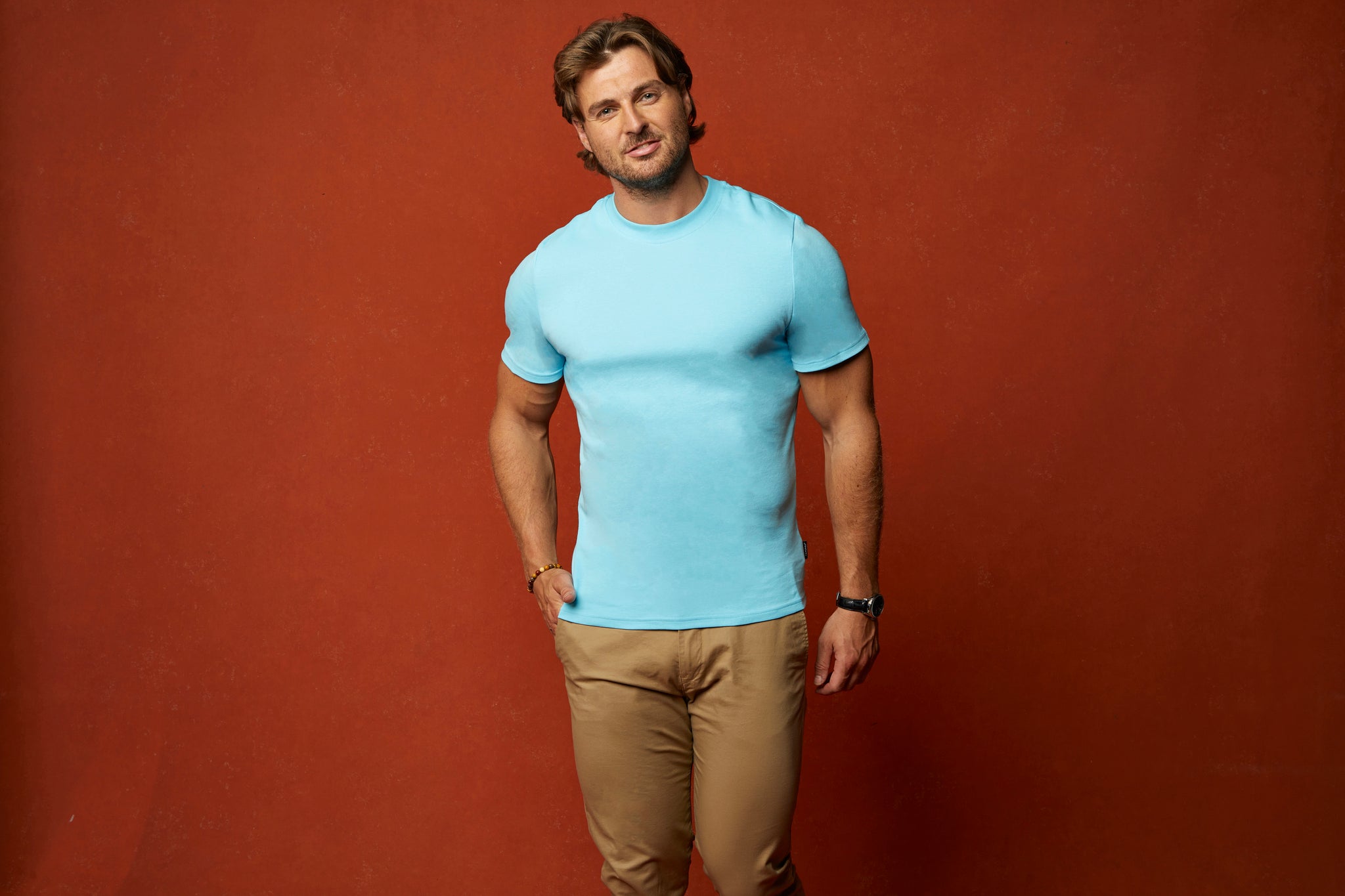
Across the chest, the shirt should skim the body without pulling. You want enough room to move, breathe, and sit comfortably, but not so much that fabric tents out from the torso. A useful test is the button line. If it lies flat, you are close. If it pulls apart or shows tension lines across the pecs, the shirt is too tight. If the fabric puffs out even when standing still, it is too loose.
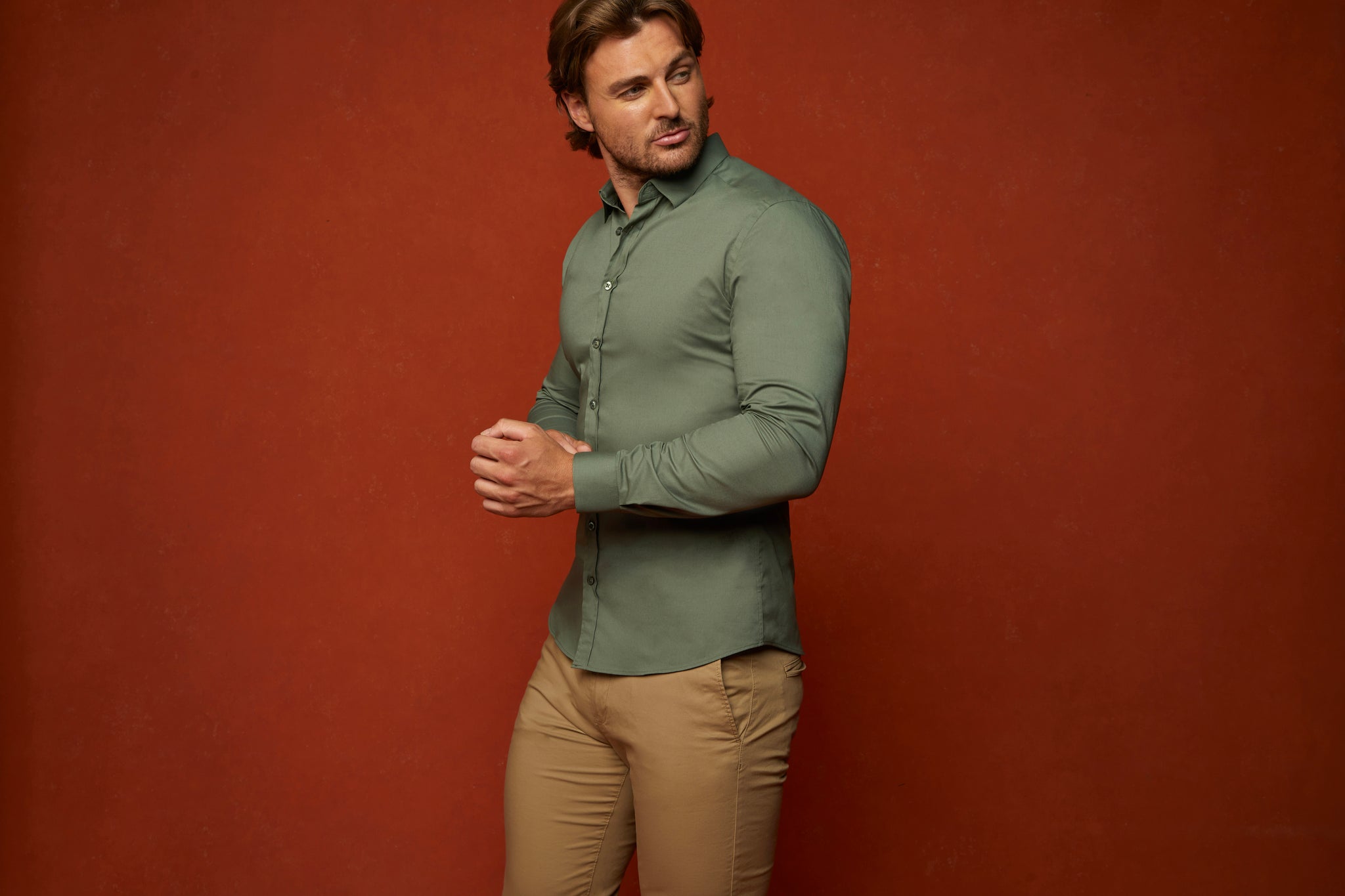
The waist is where most standard dress shirts fail athletic builds. On a V-shaped frame, the shirt should taper noticeably from chest to waist. Not aggressively enough to feel sprayed on, but enough to remove the excess cloth that causes that boxy, baggy look. If you can pinch a handful of fabric at your midsection, the cut is wrong for your build.
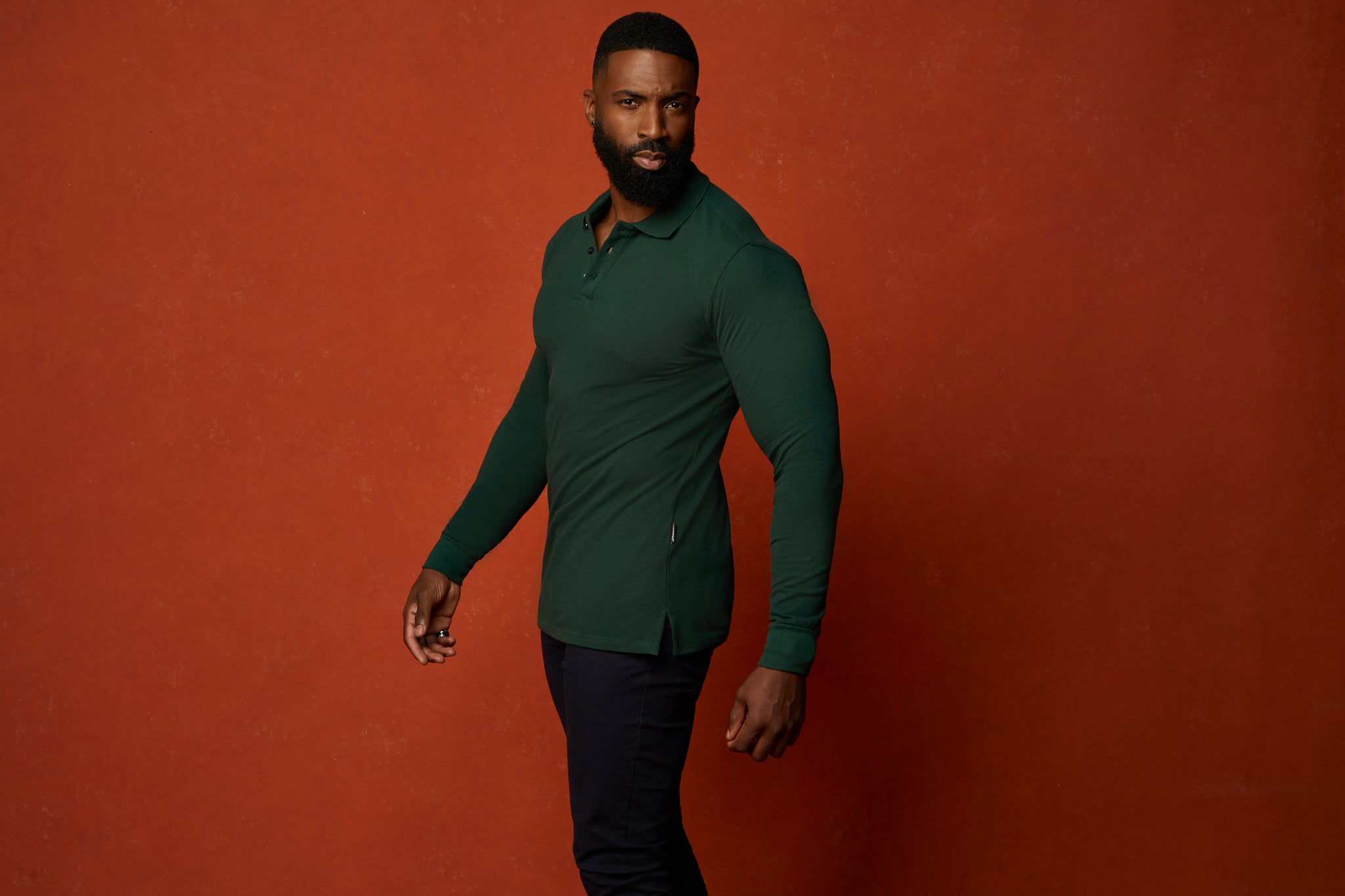
Sleeves should follow the arm cleanly without hugging it. Men with developed biceps often assume a dress shirt sleeve should feel close all the way through. It should not. You need shape, not compression. The sleeve should allow easy movement and a slight drape, while still looking tidy from shoulder to cuff.
Collar fit is simpler. You should be able to fasten it comfortably with room for two fingers inside. More than that and it starts to look loose and collapse under a tie. Less than that and it becomes uncomfortable fast, especially over a full workday.
The difference between fitted and too tight
This is where many athletic men get it wrong. They are so used to swimming in standard shirts that anything remotely shaped can feel tight at first. But fitted and too tight are not the same thing.
A fitted shirt follows your frame. It cleans up the silhouette. It removes dead space around the waist and lower back. It makes your shoulders look broader because the body of the shirt is not flaring out underneath them.
A shirt that is too tight does the opposite. It exaggerates strain points, creates pulling around the buttons, and makes movement awkward. Instead of looking sharp, it looks forced.
The easiest way to tell the difference is movement. Raise your arms, sit down, reach forward, and rotate your shoulders. A well-cut dress shirt for an athletic build should stay close to the body without fighting you. If the hem pulls out, the chest binds, or the sleeves lock up, that is not a strong fit. It is simply undersized.
Why standard sizing fails athletic men
Most off-the-rack shirting is built around a straighter torso. That works reasonably well for average proportions, but it breaks down on men with a pronounced drop from chest to waist. You end up choosing which problem you want: enough room through the upper body with too much fabric around the middle, or a cleaner waist with not enough space where you actually need it.
That is why athletic men often feel as if every shirt is nearly right but never properly right. The issue is not your body. It is the block the shirt was cut on.
A better dress shirt for an athletic build is engineered with more space in the chest and shoulders, then aggressively tapered through the waist. That sounds obvious, but very few brands actually build shirts that way. Many use the word slim when they really mean narrow everywhere, which is useless if your upper body carries muscle.
What a sharp fit should look like on the body
When your dress shirt fits correctly, the visual effect is immediate. The shoulder line is clean. The chest looks strong but not stretched. The waist comes in enough to show shape, and the shirt stays neat whether tucked or untucked, depending on the hem style.
From the side, the shirt should not billow at the lower back. From the front, there should be no excess fabric bunching around the belt line. From three-quarter view, you should see the V-taper of the torso clearly without the shirt clinging to every contour.
That is the sweet spot. Controlled shape, not squeeze. Precision, not vanity sizing.
Common fit mistakes athletic men make
The first mistake is buying for the neck only. A collar measurement matters, but if the shirt is cut for a straighter frame, the rest of the fit can still be miles off. The second is relying on the word slim fit. Slim is not a standard. On one shirt it means trim and tapered. On another it means simply a bit less baggy than regular.
The third mistake is accepting waist billow as normal. It is not normal for your build. It is just common because most shirts are not designed for it. If the shirt fits your upper body but collapses into loose folds around your midsection, that is not a small issue. It changes the entire silhouette and makes the shirt look cheaper than it is.
The fourth mistake is overcorrecting and going too tight. Some men, frustrated by years of bagginess, jump to shirts that cling across the chest and arms. That may look acceptable standing still, but it usually fails the moment real movement starts.
How should a dress shirt fit athletic build for work and formal wear?
The setting changes how sharp the fit should feel. For office wear, you want a clean line that stays comfortable over a long day. That means enough room to sit, type, commute, and wear the shirt tucked without constant adjustment. The waist should still taper, but comfort has to hold up for hours.
For formal wear, you can wear the fit slightly cleaner because movement is usually less demanding and the visual standard is higher. Under a blazer, extra fabric at the waist becomes even more obvious, so a stronger taper often looks better. Still, the shirt must not bunch under the jacket or strain when buttoned at the collar.
The fabric also changes the experience. A rigid poplin with no stretch will feel sharper but less forgiving. A shirt with controlled stretch can maintain a close silhouette while making movement easier. Neither is automatically better. It depends on whether you prioritise crisp structure or all-day flexibility.
The fastest way to judge fit before you buy again
Ignore the marketing words for a moment and assess the proportions. Does the brand allow room in the chest and shoulders without adding unnecessary width through the waist? Does the product photography actually show a taper, or just a standard slim block on a lean model? Are there signs that the shirt is designed around a V-shaped build rather than a generic body template?
That is the real filter. Athletic men do not need smaller shirts. They need better engineering.
This is exactly why specialised cuts exist. Tapered Menswear built its reputation on solving the chest-to-waist mismatch that standard shirting keeps ignoring. The appeal is simple: less bagginess, more shape, and a cleaner finish straight out of the box.
A dress shirt should make your physique look sharper, not harder to dress. If your shoulders fill it out and your waist disappears inside it, keep looking - because the right fit is not rare by accident, it is rare by design.


