




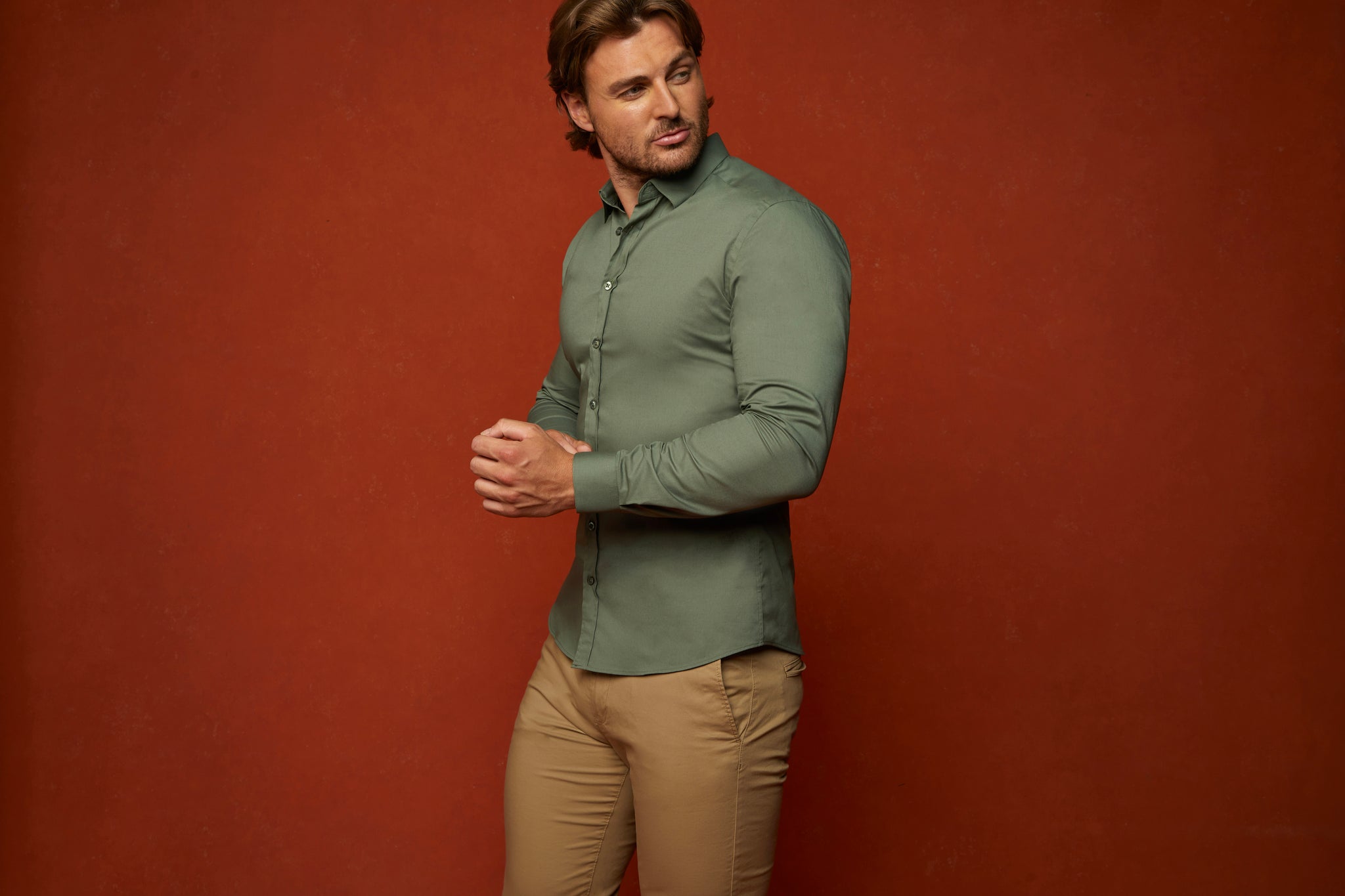
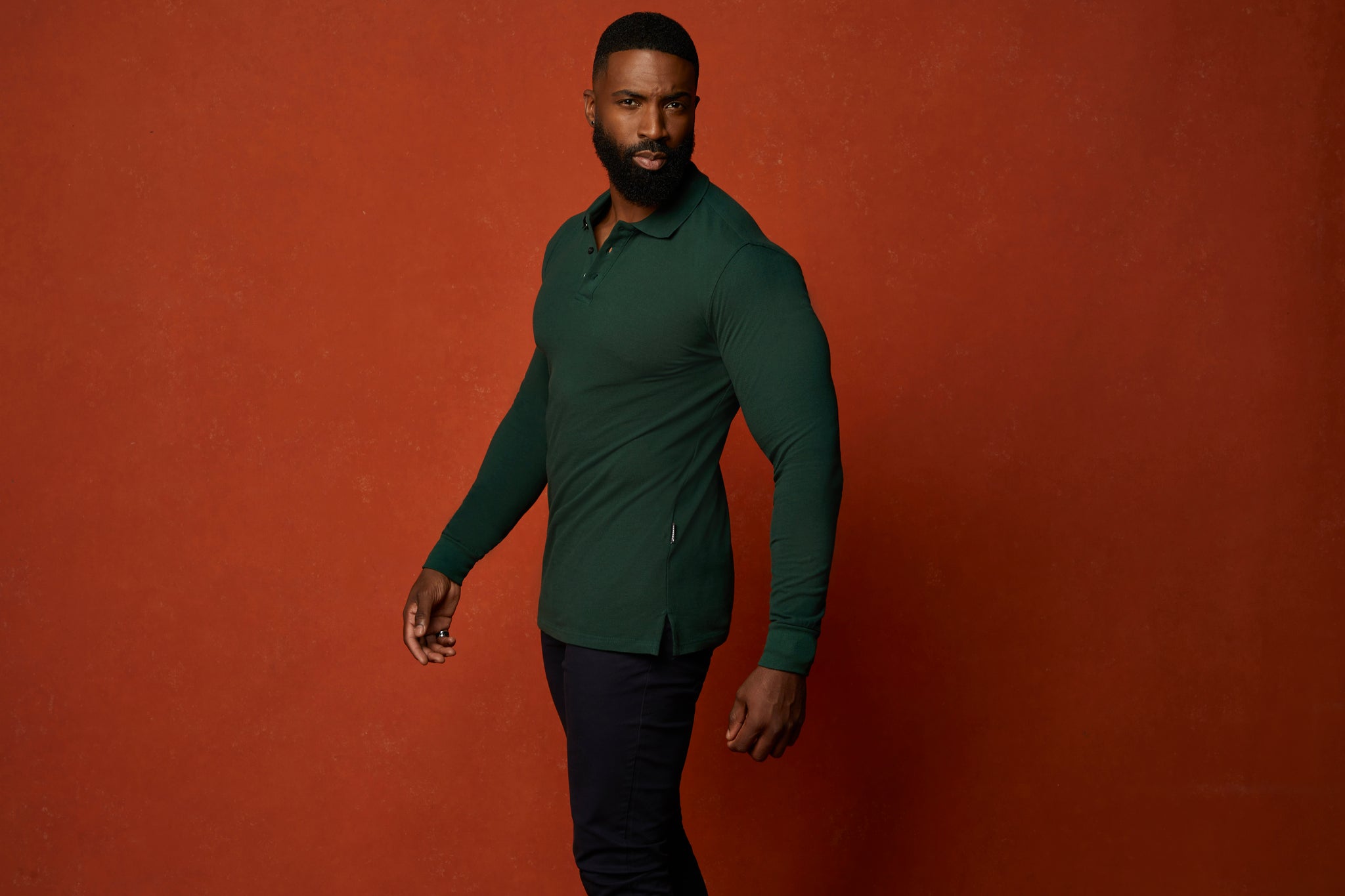
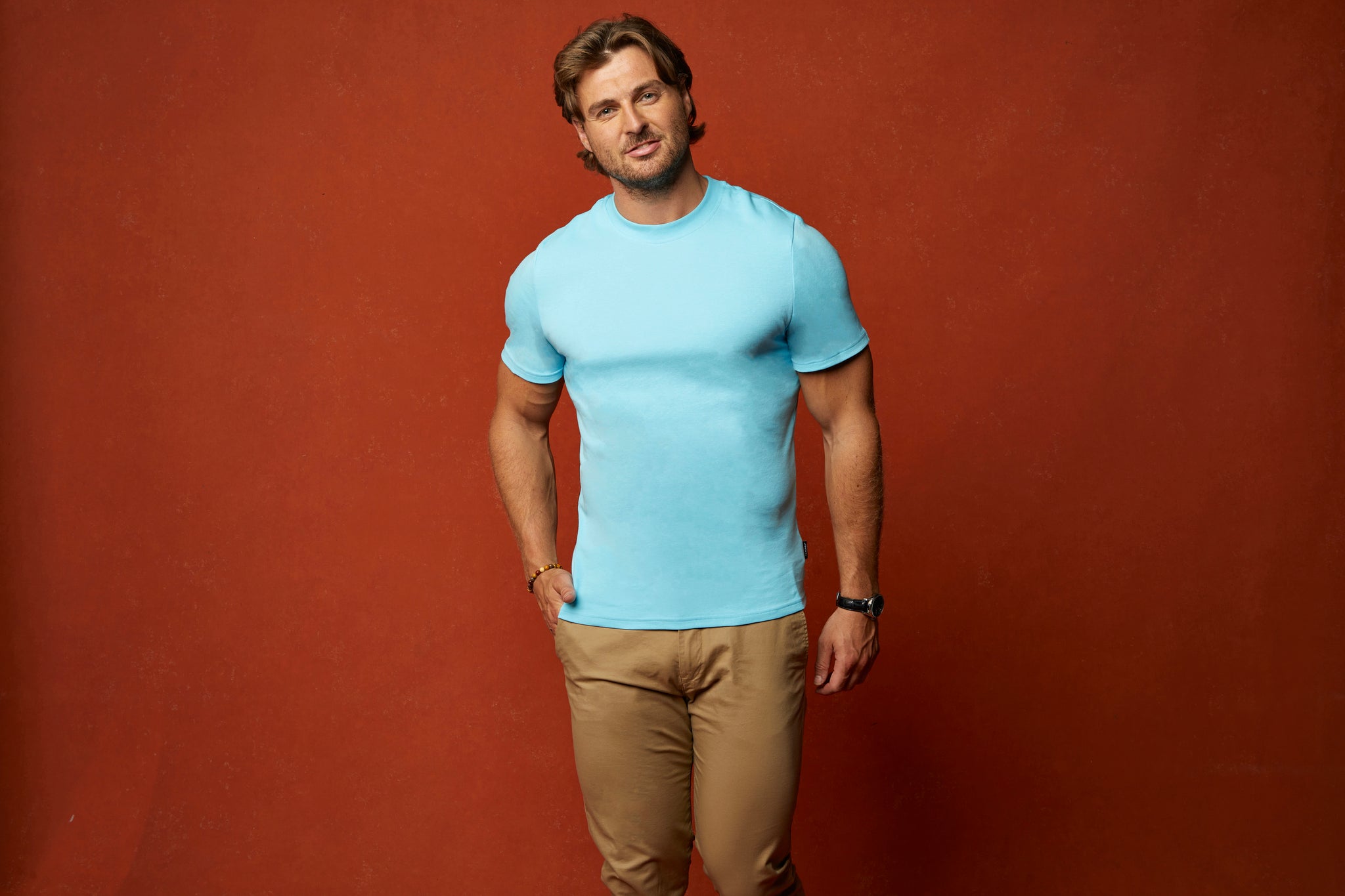

An overcoat is the most expensive thing most of us buy each winter, and on a broad-shouldered, narrow-waisted frame it is also the easiest to get wrong. These five fit checks, done in the shop or the moment the parcel arrives, tell you whether a coat suits your build before the returns window closes.
Why overcoats are harder for an athletic build
Off-the-rack coats are cut for an average body. If you train, your shoulders and chest usually need a bigger size than your waist does.
That leaves two bad options. Buy to fit the waist and the coat pulls across your back. Buy to fit the shoulders and the middle hangs like a tent.
The good news is that one of those problems is far easier to fix than the other.

Check 1: Try it on over your real layers
Menswear retailer Black Lapel advises sizing an overcoat for the heaviest layer you will actually wear underneath, because you will rarely wear one over just a shirt.
Gentleman's Gazette makes the same point from the other direction: try the coat on without your usual layers and you may end up with something too tight.
So if the coat will mostly go over a blazer, wear a blazer to the shop. If it will sit over a chunky jumper, bring the jumper.
Check 2: The shoulders come first
Black Lapel's guidance is that the shoulder seam should line up with your natural shoulder. Gentleman's Gazette adds that, because an overcoat goes over a jacket, the seam can sit slightly further out than a suit's, but not by much, or the shoulder starts to wrinkle.
This is the check that matters most, for a simple reason. Gentleman's Gazette's guide to alterations says making jacket shoulders bigger or smaller is not recommended, because reshaping that structure involves major surgery.
If the shoulders are wrong, put the coat back. No tailor will rescue it at a sensible price.
Check 3: Do up the buttons and read the creases
Fasten the coat and look in a full-length mirror. Gentleman's Gazette suggests a simple reading: diagonal X-shaped creases mean the coat is too tight, while vertical folds mean there is too much fabric.
It also suggests a pinch test. If you can grab more than a few inches of spare cloth around the torso, the coat is too big.
On a V-shaped frame you will often see the X pulling across the chest. That usually means you need the next size up, and then a tailor for the waist.
Check 4: Sleeves and length
An overcoat sleeve should cover everything underneath it. Black Lapel suggests a sleeve roughly an inch longer than your blazer's, so no jacket cuff shows. Gentleman's Gazette puts the ideal end point at the start of your thumb.
For length, Black Lapel says most people prefer a coat that falls just below the knee, and that at the very least it should cover any suit jacket underneath. Gentleman's Gazette recommends about knee length or slightly longer.
Sleeves are rarely a deal-breaker. The same alterations guide calls them perhaps the easiest part of a jacket to change.
Check 5: Feel the weight of the cloth
Gentleman's Gazette says 18 or 19 ounce fabric is now considered overcoat weight, and that heavier cloth drapes better and hides fit flaws.
That matters more for a muscular build than most. Thin, limp fabric clings to the chest and shows every pull, while a heavier cloth hangs cleanly from the shoulders.
Tapered's take: buy for the shoulders, tailor the rest
This section is our opinion, based on the facts above.
With a big chest and a small waist, a coat that fits everywhere off the peg is rare.
Instead, treat the shoulders as non-negotiable and everything else as adjustable. The alterations guide notes that taking in the sides, waist and chest is not major surgery, so a coat that fits your shoulders and is loose at the middle is a good starting point.
Ask a tailor to take in the waist so the coat follows your V shape. Gentleman's Gazette describes the ideal overcoat torso as an hourglass: broad at the top, narrower at the waist, then broader again.
We would also lean towards a heavier cloth and a slightly longer length. Both add a calm, solid line under broad shoulders, and they stop the coat looking like a stretched blazer.
Finally, skip the stiff, heavily padded shoulder. Your shoulders already do the work. Extra padding just makes you look boxy, the same problem we covered in our guide to where a shoulder seam should fall.
The quick version
Wear your real layers. Check the shoulder seam before anything else. Read the creases with the coat fastened. Accept a long sleeve or a loose waist, because a tailor can fix both. Walk away from shoulders that do not fit.


