





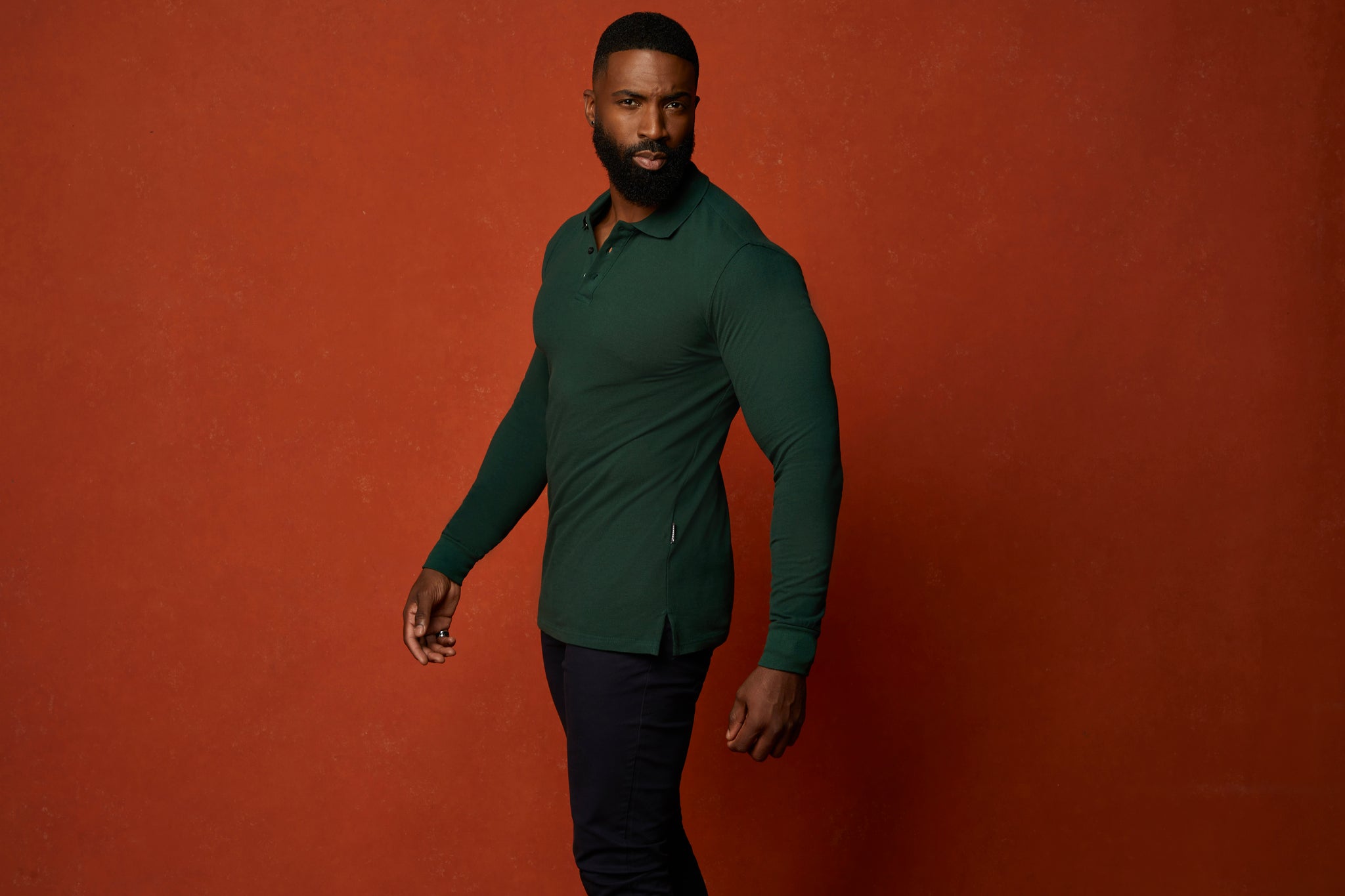


A good wool overcoat can last you a decade of winters, but only if it fits over the clothes you actually wear. Here are the four checks worth making in the changing room, plus the colour and cloth choices that keep it useful every day.
Why fit matters more on a coat than on almost anything else
An overcoat is the first thing people see from October to March. It sits over everything else you own, so if it pulls, sags or stops short, the whole outfit suffers with it.
Black Friday week brings plenty of coats into the sales, and many style writers are talking about winter outerwear right now. Before you pay, it is worth knowing what good fit actually looks like. The guidance below draws on fit guides from Gentleman's Gazette, Black Lapel and Real Men Real Style, which agree on the essentials.

Check 1: try it on over your real layers
This is the rule every guide repeats. Size the coat for what goes underneath it, whether that is a blazer, a chunky jumper or a suit, not for a thin shirt.
Real Men Real Style notes that overcoats are cut more generously than suit jackets to leave room for the clothes below. Black Lapel adds that the coat should move with you without feeling tight, but should not feel roomy either.
So wear, or bring, your thickest usual layer to the shop. Button the coat. If you see X-shaped creases pulling across the front, Gentleman's Gazette says it is too tight. Long vertical folds suggest there is too much cloth.
Check 2: the shoulders
The shoulder seam should land at the edge of your natural shoulder, or a touch beyond it to make space for a jacket. Black Lapel warns that a poorly placed seam leads to divots and wrinkles in the sleeve head.
We treat this as a deal-breaker. If the shoulders are wrong, walk away, whatever the discount.
Check 3: the sleeves
Here the guides are clear. The coat sleeve should fully cover your blazer or jacket sleeve, with no jacket cloth and no shirt cuff showing beneath it.
Gentleman's Gazette suggests the sleeve should reach roughly the base of your thumb. Too short and cold air gets in at the wrist; too long and the coat looks borrowed.
In our view, a slightly long sleeve is a much smaller problem than a bad shoulder. A coat that fits through the shoulders and body but runs long in the arm is worth a visit to the tailor.
Check 4: the length
For an all-round coat, both Gentleman's Gazette and Black Lapel point to around the knee as the sensible default. Black Lapel says many men prefer just below the knee, while shorter wearers may find a hem just above the knee more balanced.
At a minimum the coat must cover any blazer or suit jacket worn under it. If the jacket hem peeks out from below, the coat is too short for tailoring, though it may still work over knitwear.
Shorter styles exist for a reason. Real Men Real Style lists the Crombie as thigh length and the peacoat as waist length, both fine for casual wear, but less useful over a jacket.
Colour and cloth: keep it simple
Both Gentleman's Gazette and Real Men Real Style rank navy and dark grey among the most versatile overcoat colours. Real Men Real Style names camel as a common business-casual option, and we think it looks especially sharp over navy and white.
On fabric, Gentleman's Gazette recommends natural fibres such as wool, or a wool and cashmere blend, and steers buyers away from polyester and nylon. Check the composition label before you check the price tag.
Tapered's take
This is our view, not a rule from the guides above. If you only buy one coat, make it navy or charcoal wool, single-breasted and close to knee length. It works over a suit on Monday and over an Oxford shirt, a merino crew and dark chinos at the weekend.
If you train and carry a bigger chest and arms, take Check 1 seriously. Many off-the-peg coats are cut for a slimmer frame, so a coat that fits at the shoulder can still grip the upper arm once a jumper goes on. Size for the shoulder and arm, then let a tailor take in the waist if it billows. That trade almost always looks better than a coat straining at the seams.
Finally, give the coat the full changing-room test: arms forward as if driving, arms up as if reaching for a rail. If it still sits cleanly afterwards, you have found the one.


